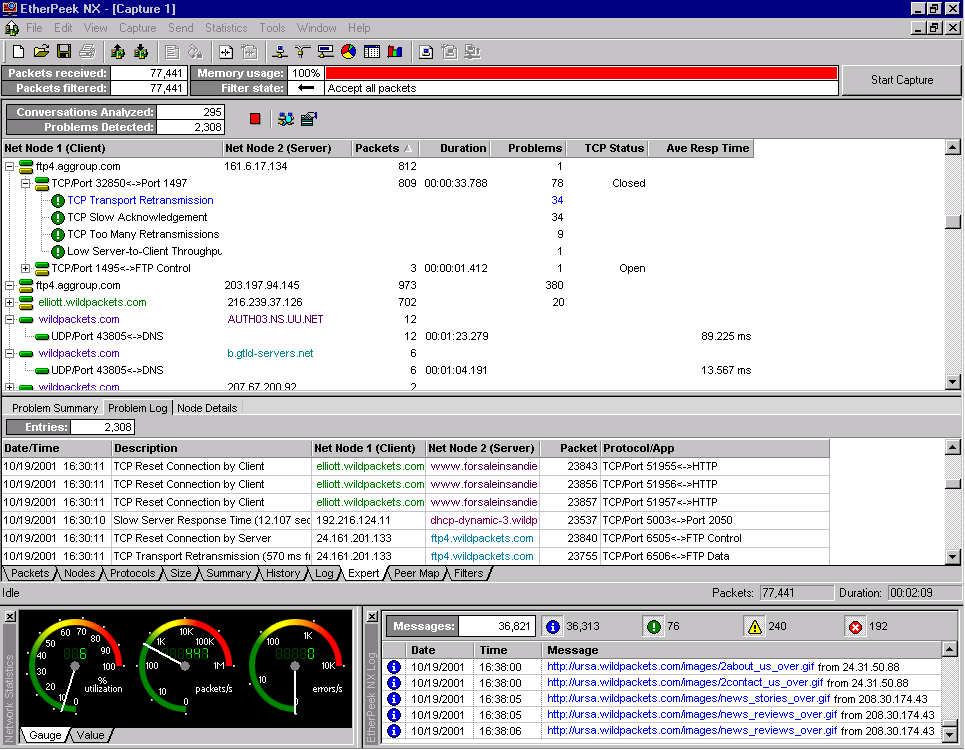
 EtherPeek NX allows multiple, simultaneous capture sessions to be active at the same time and from different segments of the network.
Multiple capture buffers can be used for a single adapter to separate different types of traffic (ie: TCP/IP into one buffer, NetWare into another).
Also, in order to analyze traffic from different network segments, multiple LAN and/or WAN adapters can be used simultaneously.
If RMONGrabber is employed, packet data from remote segments can also be accessed.
The EtherPeek NX Peer Map is drawn as a vertically-oriented ellipse, able to grow to the size necessary to show all communicating nodes within your network.
Reading the peer map is easy: the thicker the line between nodes, the greater the traffic; the bigger the dot, the more traffic through that node.
The number of nodes displayed can also be limited to the busiest and/or active nodes, or to any EtherPeek NX filters that may be in use.
It also provides over 100 real-time conditions tracked by the alarm system.
The expert system has added the ability to set 3 conditions - Suspect, Problem, and Resolved - providing finer control over when a particular condition should be considered informational, minor, major, or severe.
_________________________
_________________________
Comments
Post a Comment